
NASA’s Dragonfly Completes First Simulated Flight
Separated from its protective backshell, NASA’s Dragonfly rotorcraft autonomously speeds over the sand dunes of Titan. It scans the terrain below, searching
Quick read
This NASA Science blog post describes a successful, full-scale simulated first flight of the Dragonfly rotorcraft using flight-like avionics and sensor emulation at Johns Hopkins APL. Someone would visit to learn how Dragonfly’s navigation, lidar, cameras, and autonomy were validated ahead of its planned 2028+ launch to Titan.
- Details a comprehensive real-time first-flight simulation
- Explains sensor emulation for navigation cameras and lidar
- Outlines plans for further avionics testing and fault trials
Reactions
No reactions yet. Record a short about this link and it shows up here, in Reels and in the community feed.
Is science.nasa.gov your site? Sign in to verify it and get a Verified badge, full stats and a link-back badge.
A closer look at NASA’s Dragonfly Completes First Simulated Flight
What this NASA blog post shows
This article reports that engineers ran a comprehensive, real-time simulation of Dragonfly’s “first flight” on flight-like avionics at Johns Hopkins Applied Physics Laboratory (APL). The simulation combined flight software, avionics, navigation cameras, inertial measurement units, and a lidar system to reproduce how the rotorcraft would sense and navigate Titan’s terrain.
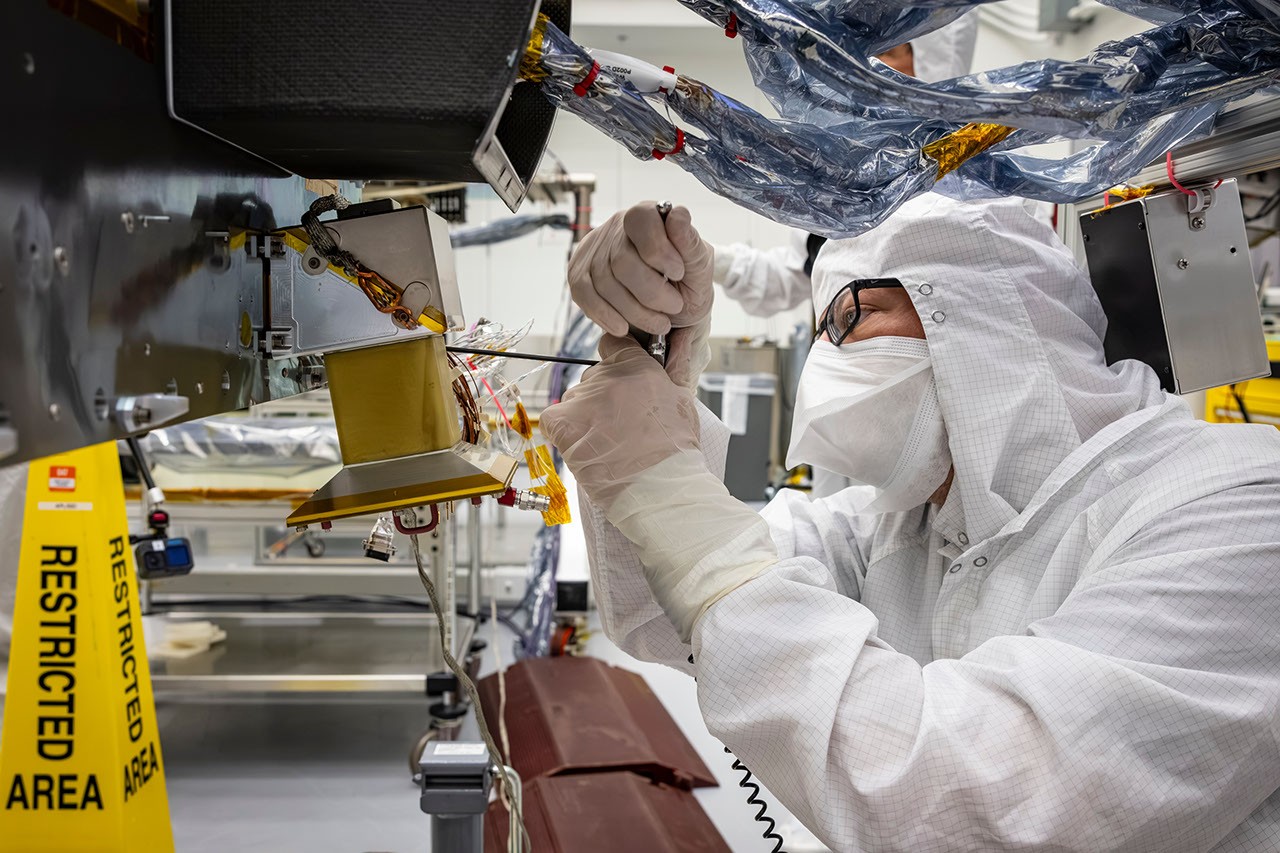
A screen capture and photos accompany the piece, and NASA staff and APL engineers are quoted describing the test and its role in developing Dragonfly’s flight capabilities.
What you can actually learn from the report
You can read specifics about what the test included: simulated lidar terrain, camera emulation using GPUs with exposure times similar to the real cameras, and integration of sensors so the team could measure timing and interactions in milliseconds.
The article explains the test sequence used incremental steps over time (from single-rotor spinups to reposition and scouting flights) and that future tests will run on Dragonfly’s actual flight system and include fault-injection to validate autonomy.
Who will find this useful
People interested in the Dragonfly mission, spacecraft testing, and autonomous flight systems will get concrete, technical-focused progress updates from this post.
Readers who follow NASA mission milestones or want to understand how sensors, simulation, and avionics are validated before a planetary mission will find the described details relevant.
Questions people ask about NASA’s Dragonfly Completes First Simulated Flight
- Did this test happen on Titan?
- No, the test was a simulation run on flight-like computer testbeds at Johns Hopkins APL, not an actual flight on Titan.
- What systems were included in the simulation?
- The simulation incorporated flight software, avionics, navigation cameras, inertial measurement units, and lidar, with camera images rendered in real time by a custom emulator.
- Will Dragonfly fly autonomously at Titan?
- The article says autonomy is essential because Dragonfly will have to fly without real-time help from Earth, and tests are designed to validate that autonomy.
NASA’s Dragonfly Completes First Simulated Flight was shared on NexURLs by Nexis on November 4, 2026, in Science.
What we found on this site
- Built with
- WordPress
- Served through
- Nginx
- Home page answered in
- 518 ms
- Trackers
- Google Tag Manager
- Ads
- None found
- RSS feed
- Yes
- AI crawlers
- Lets them in
- Set up for phones
- Yes
- Real-visitor speed
- Passes Core Web Vitals
- Popularity
- Top 5,000 domain (Cloudflare)
- Google safety check
- No threats found
- Domain registered
- 1997
- Domain renews
- July 2027
Checked November 4, 2026 from the site’s own code and public records. See how the rest of the web compares in the NexURLs Internet Report.
Quick answers
What is NASA’s Dragonfly Completes First Simulated Flight?
NASA’s Dragonfly Completes First Simulated Flight (science.nasa.gov): This NASA Science blog post describes a successful, full-scale simulated first flight of the Dragonfly rotorcraft using flight-like avionics and sensor emulation at Johns Hopkins APL. Someone would visit to learn how Dragonfly’s navigation, lidar, cameras, and autonomy were validated ahead of its...
Who shared NASA’s Dragonfly Completes First Simulated Flight on NexURLs?
It was shared by Nexis in November 2026. Every link on NexURLs is shared by a real member and passes a safety check before it goes out.
What are some sites like NASA’s Dragonfly Completes First Simulated Flight?
Members found these close to it: SpaceX Soft Lands Falcon 9 Rocket First Stage, NASA JPL Looks to Next 90 Years of Innovation, Florr.io. The full list is on this page under Sites like NASA’s Dragonfly Completes First Simulated Flight.
Sites like NASA’s Dragonfly Completes First Simulated Flight
- SpaceX Soft Lands Falcon 9 Rocket First Stagespacex.com
- NASA JPL Looks to Next 90 Years of Innovationnasa.gov
This NASA webpage recounts Jet Propulsion Laboratory’s 90-year history of space exploration and outlines upcoming JPL...
- Florr.ioflorr.io
- NASA’s Perseverance Sets Off-World Record for Total Distance Drivenscience.nasa.gov
A NASA blog post announcing that the Perseverance Mars rover has driven farther on another world than any previous...
- Next Spaceflightnextspaceflight.com
- Omdrop Owl - AirDrop style sharing for non-Apple devicesgithub.com
This site hosts the omdrop-owl project, which enables AirDrop functionality for non-Apple devices. Users interested in...
More Science finds
- Glandular biofluorescence in fire salamanders (Salamandra salamandra)royalsocietypublishing.org
- T-regulatory cell protection of progenitor cells...nature.com
- Fraction comparison trick revisitedjohndcook.com
- Two new stick insect species emerge from Queensland forestsabc.net.au
- Verification Is Not Knowledge: Science needs more than answersblog.cosmos-institute.org
- Sculpted light steers ultrafast electron flow in an atomic-scale microscopeeurekalert.org
Feeling lucky? Try the random website generator.
Where people went next
Nobody has added a next stop yet. Be the first.